
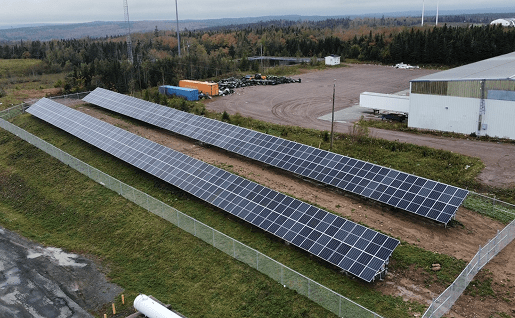
Solar trackers are solar mounting systems for photovoltaic (PV) panels that track the path of the sun across the sky. The PV solar trackers maximize energy production by adjusting their panels to face the sun’s position as it moves across the sky and exposing more of the solar panel face to direct sunlight. Typically, solar trackers are found on large, ground-mounted system projects, such as utility-scale or community solar projects, because of their high installation and hardware costs.
There are two types of solar trackers available on the market, single-axis vs dual-axis. The single-axis tracker follows the sun’s movements from east to west and rotates on only one axis point. Dual-axis trackers can rotate in two directions, moving up and down, left to right, allowing for more accurate tracking of the sun.
How Do Solar Trackers Work?
Without getting too much into the nitty-gritty, we can take a high-level look at how solar trackers work and still cover the essentials. An optimized solar tracker is able to continuously follow the sun’s movement throughout the day and may increase the solar energy output by up to 40% as compared to fixed-tilt solar racking systems.1 The trackers’ ability to rotate on an axis allows for maximum absorption at all points of the day compared to fixed-tilt systems which will only see maximum production when the sun is shining directly on the solar panel face.
Single-axis vs. Dual-axis Solar Trackers
Single-axis and dual-axis tracking systems each have their advantages and traits that determine the panels’ optimal performance setting.
Single-axis solar trackers | Dual-axis solar trackers |
| Rotates on a single axis, turning from east to west throughout the day | Rotates on two axes, turning vertically and horizontally |
| Tracks the sun across a horizontal plane. | Tracks the sun with a circular movement. |
| Typically has lower costs | Typically has higher costs |
| Longer lifespan | Shorter lifespan |
| Energy efficient | Extremely energy efficient |
| Typically seen in commercial and industrial/utility applications | Typically seen in smaller sized, remote projects |
(Marsh, 2022)
Benefits and Drawbacks of Solar Trackers
Solar trackers generally come in ahead of fixed-tilt solar mounting systems when comparing their respective electricity generation. Yet with any solar panel system, there are also some disadvantages to a solar tracking system. For a detailed comparison of single-axis trackers vs fixed-tilt solar mounting systems, we recommend reading our previous blog post Pros and Cons of Ground-Mount Fixed-Tilt Solar Racking and Single-Axis Trackers. If you’re looking for a quick summary, keep reading.
Benefits of Solar Trackers
Efficiency: Increased electricity production is probably the largest benefit of solar tracking systems. Single-axis trackers typically will generate between 25% – 40% more than fixed-tilt solar racking and mounting systems. In contrast, the dual-axis trackers will generate only 5%-10% more electricity than fixed-tilt systems. (Marsh, 2022).
Increase in Revenue: Trackers produce more energy than fixed-tilt trackers and typically will have a higher financial rate of return even when factoring in higher costs.
System, Construction, and Maintenance: Both types of solar systems, fixed-tilt and solar trackers, require regular maintenance such as vegetation management, snow removal, and other cleaning services. However, advancements in technology have reduced long-term maintenance needs for tracking systems.3
Drawbacks of Solar Trackers
Cost: Installation and maintenance costs can drive up the total cost of a solar tracker. The cost for a fixed-tilt solar mounting system will tend to run lower as fewer moving parts and electronics are required, whereas the cost for a solar tracker tends to run higher due to the more complex technology needed for their operation.
Environment: Climates that are less challenging, for example with little to no snow, are ideal for solar trackers. Fixed-tilt mounting systems can generally accommodate harsher environmental conditions as well higher slope inclinations from east to west. Solar trackers, on the other hand, can accommodate around 10% gradient in the north to south direction, allowing for maximum sun absorption.[nectar_image_comparison image_url=”3659″ image_2_url=”3657″]If you’re thinking of building a solar project, by now you know there are a lot of elements to consider, from budget to terrain, to climate conditions and project lifespan. Whether you are planning to select a single-axis tracker or a dual-axis tracker, it’s important to find the right solar setup for your property that is both economic and maximizes energy absorption. If you are interested in learning more, leave us a message by filling out the form below and someone from our team will connect with you.[divider line_type=”No Line”]
References:
1 Chakrabarti, Sumit. (2021). Types of Solar Trackers and Their Advantages & Disadvantages. Solar Feeds. Retrieved from https://www.solarfeeds.com/mag/solar-trackers-types-and-its-advantages-and-disadvantages/#Application_of_Dual-Axis_Solar_Tracking_System
2 Marsh, Jacob. (2022). Solar Trackers: Everything You Need to Know. Buyer’s Guide. Retrieved from https://news.energysage.com/solar-trackers-everything-need-know/
3 SPW. (2016). Advantages and disadvantages of a solar tracker system. Solar Power World. Retrieved from https://www.solarpowerworldonline.com/2016/05/advantages-disadvantages-solar-tracker-system/
4 S.P.W. (2018). Fixed-tilt vs. tracker: Why a one-size-fits-all approach can limit solar production. Retrieved November 4, 2021, from https://www.solarpowerworldonline.com/2018/02/fixed-tilt-vs-tracker-one-size-fits-approach-can-limit-solar-production/[divider line_type=”No Line”][recent_posts style=”default” columns=”4″ title_labels=”true” category=”single-axis-tracker” order=”DESC” orderby=”date”]