
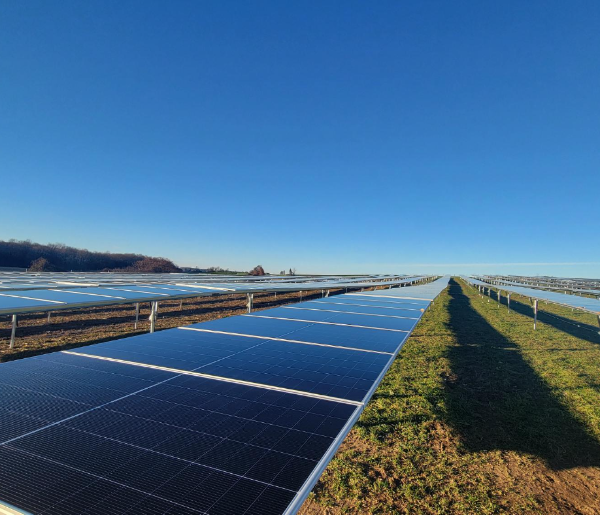
Why Full Module Support Matters for Large-Format PV Modules
PV modules continue to increase in size and power output. While larger-format modules can improve project economics, they also create greater structural demands on the racking system, particularly in regions exposed to high snow and wind loads.
As module dimensions increase, so does the importance of how the module is supported.
Larger Modules Create Larger Structural Demands
A PV module is designed to generate power. It should not be expected to function as a structural beam.
When a module is supported primarily near the centre of the tracker row, larger portions of the module may remain unsupported. Under snow, wind and other environmental loading, those unsupported spans can experience increased deflection and greater stress on the module frame and glass.
The issue becomes more significant as modules become longer and wider. A support approach that may have been adequate for previous module generations may not provide the same level of support for today’s larger formats.
This is why tracker design should evolve alongside module technology.
Full-Length Support Reduces Unsupported Spans
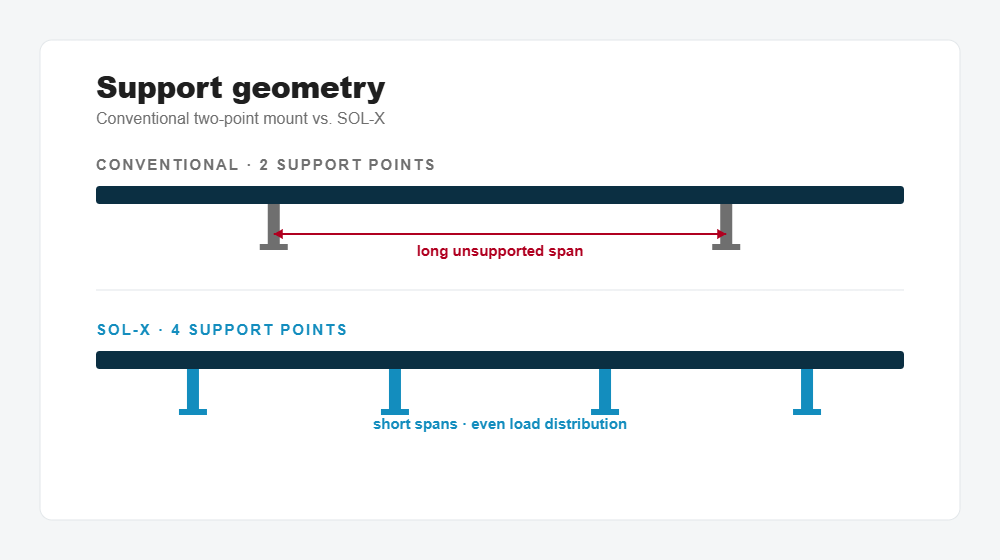
SOL-X Single Axis Tracker, from Polar Racking [link to sol-x page] is designed with support running along the length of the module.
This approach helps:
- reduce unsupported module spans;
- distribute loading more evenly;
- control module deflection;
- reduce concentrated stress on the module and its frame; and
- support performance in demanding snow and wind regions.
Rather than relying only on central support, SOL-X is engineered around the full module.
The objective is straightforward: provide the module with a support system suited to its actual size, loading requirements and operating environment.
Why Deflection Control Matters
Module deflection is not merely a visual concern.
Excessive movement can place additional stress on the module frame, glass, mounting points and surrounding structural components. Over the service life of a project, controlling that movement can help protect the integrity of the module and the broader solar asset.
This is particularly important for projects located in areas with:
- high design snow loads;
- elevated wind exposure;
- extreme seasonal conditions; or
- increasingly large and heavy PV modules.
A tracker must do more than rotate the modules. It must provide a stable structural platform under the project’s governing design conditions.
Designed for the Modules of Today and Tomorrow
Module technology is continuing to change. Developers, EPCs and asset owners should therefore evaluate more than tracker capacity and installation speed.
They should also ask:
- How is the module supported?
- What are the unsupported spans?
- How is loading distributed?
- How does the system control module deflection?
- Is the tracker suited to the project’s actual snow and wind conditions?
- Can the support configuration accommodate the selected module format?
These questions should be addressed before procurement, not after construction.
Protecting the Long-Term Asset
The racking system is expected to support the PV modules for decades. Tracker selection should therefore consider not only upfront installation, but also long-term structural performance and asset protection.
SOL-X provides full-length module support designed to reduce unsupported spans, improve load distribution and help control deflection under demanding conditions.
Because larger modules deserve a tracker designed around the entire module—not merely the centre of the row.